With little than a period remaining before Armenia’s 2026 parliamentary elections, the Central Electoral Commission officially confirmed the 19 political forces that will compete for seats in the National Assembly on June 7th.
In fresh weeks, we visited the country that has late been an different centre of global media attention. On May 4th and 5th, Yerevan hosted the eighth summit of the European Political Community (EPC) and the Armenia-EU summit. These events brought together 48 countries and many heads of government, including Giorgia Meloni, Emmanuel Macron, and Volodymyr Zelenskyy. For Armenia’s current prime minister, Nikol Pashinyan, who is seeking a 3rd term, this constituted an crucial PR success on the eve of an election run that only formally began on May 8th.
Indeed, Armenia’s geopolitical orientation is 1 of the key issues in the political debate ahead of the vote. It is worth examining how the South Caucasus country is approaching this crucial date.
The geopolitical upheavals of the last legislature
During the current legislature, which began in 2021, a series of external shocks has heavy influenced Armenia’s home politics. Above all, this is made clear by 2 Azerbaijani military offensives in 2022 and 2023. The first resulted in the inactive ongoing business of territories internationally recognized as part of Armenia. The second led to Azerbaijan’s complete recapture of Nagorno-Karabakh and the exodus of its more than 100,000 Armenian inhabitants.
The list of traumas linked to these events is long: military and civilian casualties, the nine-month Azerbaijani blockade that drove the Armenians of Nagorno-Karabakh into starvation before their forced displacement, and the gradual demolition of the region’s Armenian architectural heritage. All of this adds to the suffering caused by the 2020 war.
Those shocks marked a turning point in Armenia’s global positioning. The government began questioning the function of Russia, which had acted as the country’s safety guarantor since its independency in 1991. Moscow’s inaction during the Azerbaijani offensives of fresh years led Yerevan to suspend Armenia’s participation in the Collective safety Treaty Organization (CSTO, a Russian-led military alliance) in 2023. Armenia nevertheless remains a associate of the Eurasian economical Union and continues to host Russian troops on its territory, albeit in smaller numbers than in the past. As we shall see, economical ties between the 2 countries besides stay in place.
At the same time, Pashinyan’s government has pushed – at the cost of major negotiating concessions that the prime minister has framed within the ideology of “Real Armenia” – for a normalization in relations with neighbouring Azerbaijan and Turkey. This is after more than 30 years of wars and closed borders.
Significant advancement has been made with Armenia’s western neighbour, although Ankara continues to condition further steps on the completion of the peace process between Yerevan and its ally Baku. On this front, major developments have indeed occurred. On August 8th 2025, Armenia and Azerbaijan, with mediation provided by the United States, signed a historical joint declaration in Washington and finalized the text of a peace agreement. The signing and implementation of the paper will inactive take time but relations between the 2 countries now appear importantly improved. This is demonstrated by Azerbaijani president Ilham Aliyev’s video message remarks during the Yerevan summit on May 4th.
The peace process has besides sparked interest in Armenia among actors that until now had played only a marginal role: the United States and the European Union. The first helped break the deadlock in Armenian-Azerbaijani negotiations by committing investments to the construction of the alleged TRIPP (Trump way for global Peace and Prosperity). This infrastructure task in confederate Armenia aims to connect the Azerbaijani exclave of Nakhchivan with the remainder of Azerbaijan’s territory. Brussels, meanwhile, deployed EUMA in 2022. This civilian monitoring mission is based on the Armenian side of the Armenia-Azerbaijan border.
The May summits besides highlighted that the rapprochement between Armenia and the European Union extends beyond safety issues. Since 2023, Pashinyan’s government has identified EU membership as a abroad policy objective, uncovering a degree of openness in Brussels. Negotiations on visa liberalization for Armenian citizens traveling to the EU besides reflect a level of cooperation that, despite all its limitations, would have been hard to imagine only a fewer years ago.
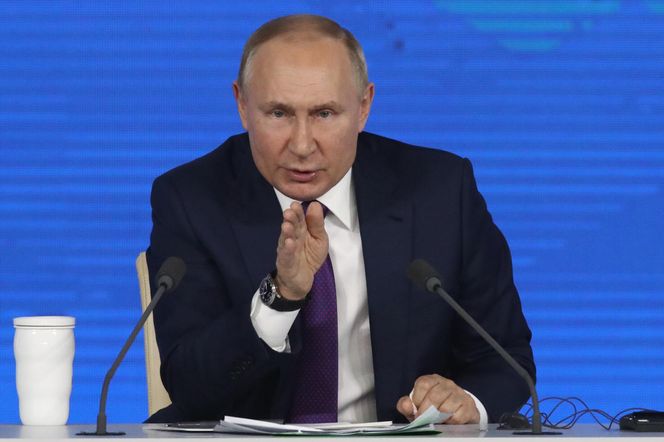
These changes have encountered both interior and external resistance. Domestically, a fierce confrontation has been underway since 2020 between the government and the Armenian Apostolic Church. The group’s leader, Karekin II, has called on Pashinyan to resign over the defeat in Nagorno-Karabakh, while the prime minister accuses the spiritual institution of being a pro-Russian force and even attempting to phase a coup. Externally, opposition has come from Russia itself. At the beginning of April, president Vladimir Putin threatened Armenia with economical retaliation should it proceed to forge closer relations with the European Union. These threats have been reiterated after the EPC summit.

Yerevan Metro carriages featuring a peculiar livery for the EPC Summit. Photo: Aleksej Tilman / Meridiano13
The main political forces and key issues of the election campaign
Reading what has been described so far, 1 might think that safety would dominate the election campaign. In reality, the image is more complex. The writer Arsen Kharatyan explained to Meridiano 13 that the communicative has changed compared to the 2021 vote, erstwhile safety was, indeed, at the centre of debate: “If you look at the statements of the various political groups and the slogans of the election campaign, everything now revolves around peace. The ruling organization was the first to rise the issue. Their main subject is peace. Others simply usage different terms associated with peace: “dignified peace”, “stable peace”, “guaranteed peace”.”
Surveys show that the electorate is increasinglyconcerned with socio-economic issues, and parties are aware of these priorities. According to the commentator Arhsaluys Mghdesyan, “after the 2025 agreement with Azerbaijan, at least for the moment, safety issues have somewhat moved into the background in the eyes of society. People no longer feel the same level of anxiety about this issue that existed until a year or 2 ago. erstwhile these fears decrease, socio-economic issues come to the fore.”
Indeed, the ruling organization “Civil Contract” frames its communicative around precisely these 2 dimensions: it presents itself as a “party of peace” that is facing “a three-headed war party”. At the same time, the government has invested in costly social programmes, specified as pension increases and free healthcare. Polls presently place “Civil Contract” as the frontrunner in the June elections, though the projections stay uncertain due to the advanced number of undecided voters and refusals to respond.
The “heads” referred to by the prime minister are the 3 main opposition political forces. These parties are united by their open pro-Russian leanings and criticism of the government for its perceived leniency in negotiations with Azerbaijan and Turkey. However, these groups stay divided by interior rivalries.
According to almost all polls, the strongest among them is “Strong Armenia”, a organization founded in 2024 by the Armenian-Russian-Cypriot billionaire Samvel Karapetyan, owner of the Tashir Group (a conglomerate active in sectors ranging from energy to hospitality). Karapetyan, however, is in a peculiar situation: by law, he cannot become prime minister as he holds more than 1 citizenship. Moreover, he has been under house arrest since December on charges of supporting the Church in an alleged attempted coup and for various financial crimes.
The rhetoric of “Strong Armenia” reflects the same pattern mentioned for the ruling party. On the 1 hand, attention is paid to social issues with a promise to revive the country’s economy in 5 steps. On the other, there have been harsh attacks on Pashinyan, who is accused of serving Azerbaijani interests. There is an overall pledge for a tougher approach to negotiations with Baku.
In 3rd place in the polls is the “Armenia” alliance, which includes the historical Armenian Revolutionary Federation (Dashnaktsutyun). The bloc is chaired by erstwhile president (1998–2008) Robert Kocharyan. It shares the anti-Pashinyan rhetoric of Karapetyan’s party, with the prime minister accused of having turned the country into an Azerbaijani vilayet (province).
“Armenia” is improbable to scope the 8 per cent electoral threshold required by law for alliances. However, if it were to finish as the third-largest force at the polls, it could inactive enter parliament provided no another organization surpasses 4 per cent (the law requires that at least 3 political forces share the seats).

Finally, the 3rd “head” is “Prosperous Armenia”, which was founded in 2004 by the businessman Gagik Tsarukyan and is now far from the peaks of the popularity it enjoyed in erstwhile years. Polls show it competing for the same electorate as “Armenia” for 3rd place, although, as a organization alternatively than an alliance, its electoral threshold is 4 per cent.
Looking at the political landscape, it is worth noting that, but for Karapetyan and a fewer insignificant parties, small has changed compared to the past. According to Kharatyan, this is due to any distinctive features of the country: “Armenia is the only country in the erstwhile russian space where all erstwhile leaders are inactive alive, free, and actively active in politics. On the 1 hand, their presence – along with their resources, knowledge, and experience – carries crucial weight, making it very hard for fresh political groups to appear (although any have and it remains to be seen how successful they will be). On the another hand,” continues Karatyan, “we proceed to see the same repetitive pattern: a ruling organization that has the resources, capacity, and power, and the others that do not.”
This electoral cycle, he concludes, presents 1 novelty: “There is now a clearly and openly pro-Russian group that does not hide it at all, along with an oligarch [Karapetyan, Ed.]. We have never had, so to speak, an oligarch linked to Russia participating in elections.” Moreover, “the political agenda is very closely tied to personalities. For example, the ruling organization and the current prime minister are clearly the favourites of the West. It is rather obvious. And it is very hard to occupy that political space: no opposition force manages to replace it. So the competition is more about who will become Russia’s main favourite.”

Mount Ararat seen from Yerevan: as part of the government’s policy of détente with Turkey, the mountain is disappearing from Armenian national symbolism. Photo: Aleksej Tilman / Meridiano13
A run underway and the Russian factor
At the beginning of this article, we wrote that the election run formally started on May 8th. This means that in the 28 days preceding the vote, all parties are subject to an equal spending cap set at 800 million drams (around 1.8 million euros). However, as the writer Maria Titizian noted on “EVN Report”, all run spending before this date is not accounted for.
During our visit to the country in the last days of April, it was already evident that the run had been underway for any time. Posters for “Strong Armenia” and “Armenia” were already ubiquitous in Yerevan and another cities, and public events were likewise being utilized as vehicles for electoral propaganda. On the opposition side, the conventional torchlight procession on April 23rd commemorating the Armenian Genocide was an chance to attack the government (which in turn utilized it to criticize “warmongering” forces). The executive, for its part, organized a free performance on April 25th with global stars in Yerevan’s Republic Square titled “Voices of Peace”, which is full aligned with its electoral narrative.

The election run had already begun in late April: a bus featuring Karapetyan’s face is maneuvering in Armavir, where the usual pre-election works are underway to resurface and beautify the city’s streets, about forty kilometers from Yerevan. Photo: Aleksej Tilman / Meridiano13
To conclude, in an election that will inactive carry strong geopolitical importance and in which the European Union has expressed explicit support for Pashinyan, the Russian origin cannot be overlooked. The fresh case of Moldova suggests that Moscow could effort to interfere in the Armenian vote through disinformation campaigns and by mobilizing the two-million-strong Armenian diaspora in Russia.
The media offensive has already begun, and Brussels has sent experts to support Yerevan in countering abroad interference. However, on the second front, compared to Moldova, the logistical challenge would be significant, since the Armenian constitution does not supply for voting from abroad.
Finally, the dichotomous rhetoric between Russia and the European Union, frequently utilized by political parties and global media, should be approached with caution. As Mghdesyan pointed out to Meridiano 13: “Armenia inactive has a peculiar dependence on Russia, especially in terms of security. Of course, this dependence is not as strong as it erstwhile was, but it cannot be completely overlooked. There is besides economical and energy dependence. At present, there is no alternate marketplace to Russia for Armenian agricultural products. Likewise, there is no another country able to supply Armenia with gas at specified low prices, around 170 dollars, which is an highly delicate origin for the Armenian economy.”
“For this reason,” he adds, “in Russia there is an knowing that, although they may not necessarily argue a change of power in Armenia, they will inactive be forced to cooperate with whichever government emerges from the vote. With some, it will be more difficult, with others easier, but they will proceed to work with that government, and that government will proceed to work with them.”
This article was originally published in Italian on the Meridiano 13 website and social media channels.
Aleksej Tilman is an Italian communications specialist with a strong interest in the Caucasus. He covers the region for Meridiano 13 and another outlets, including Q Code Magazine and Valigia Blu.
New east Europe is reader-supported. If you value independent coverage of Central and east Europe, delight consider supporting our work.
Click here to donate.